Lagago Logistics
Role
Lead Product Designer
Year
2025
Tools
Figma, FigJam, Maze
Overview
Lagago is a Lagos based logistics platform designed to make courier services faster, more transparent and user friendly. Unlike traditional delivery apps that often feel confusing or unreliable, Lagago focuses on clear pricing, intuitive design and efficient rider communication.
Problem Statement
Most courier apps in Lagos suffer from a lack of transparency, leaving users unsure about their deliveries. Key issues include: • Complex onboarding flows that confuse new users • Outdated and unintuitive UI UX systems • Unclear pricing models that reduce trust • Poor rider communication (slow responses and lack of real time updates) Impact: These issues lead to frustrated users, reduced loyalty and high app abandonment rates.
User Research
Research insights revealed major trust and communication gaps in existing logistics platforms, especially among frequent online shoppers and small business owners in Lagos. Key findings: • 73% of users have experienced a "lost" package that was later found misplaced rather than actually lost • Users value real time visibility and direct communication with riders • Transparency is a major factor in platform trust and retention
Strategy
The product was reframed around three core principles: • Know where it is • Know when it arrives • Know what to do if something goes wrong This helped simplify the experience and align all features around user certainty.
Solution
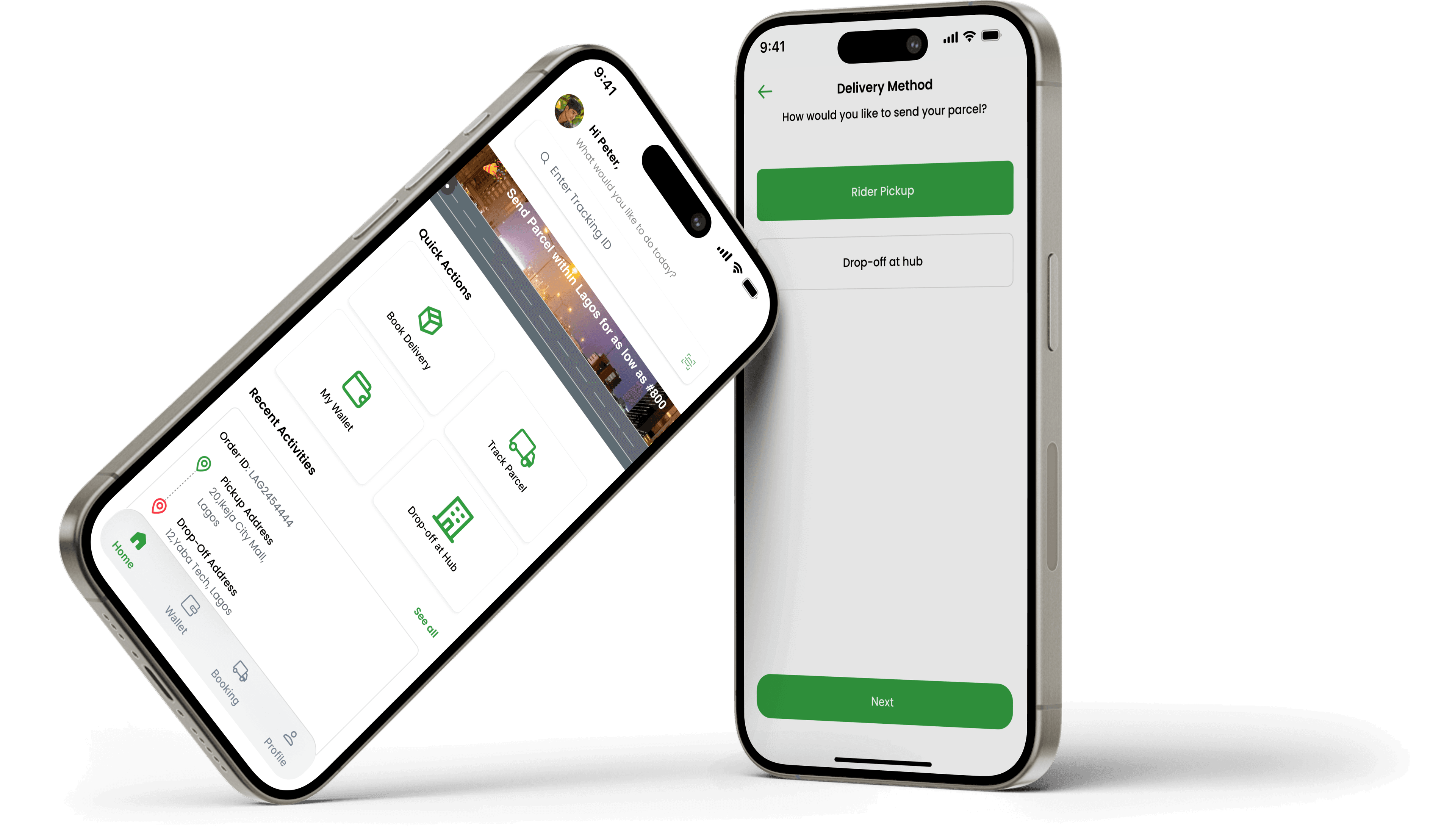
Lagago introduces a tracking first logistics experience designed to remove uncertainty from deliveries. Core features include: • Clear upfront pricing based on package size • Step by step onboarding flow • Real time tracking with live map updates • Direct rider communication (chat and call features) • Flexible delivery options (pickup or drop off at hub) • Wallet based system for fast and secure payments
Design Focus
The interface prioritizes clarity, speed and transparency, ensuring users can always understand the status of their delivery without confusion.
Outcome
Prototype testing showed improved task completion rates and higher user confidence in tracking and delivery updates compared to traditional logistics apps.
Key Lesson
In markets with low trust in logistics systems, design must make invisible processes visible through clarity, transparency and real time feedback.